﷽
Ibn al-Qayyim (raḥimahullāh) said:
“The heart in its journey towards Allāh Subḥānahu wa Ta’ālā is like a bird whose head is love, and hope and fear are its two wings. When the head and the two wings are sound, the bird flies well, but when the head is cut off, it immediately dies, and when either or both wings are absent, the bird is the victim of any hunter or snare.”
— Madārij al-Sālikīn, Vol. 2, The Station of Fear, Page 170.
Three foundations, then. Love, hope, and fear. Three realities upon which the journey of the heart rests.
And I have sat with this framework for a long time. I have studied it. I have tried to live it. But the longer I walk, the more I see something that grows from these three. It is there, waiting, in every heart that truly understands where its love, its hope, and its fear actually came from.
And it stems from the gem of the heavens, something written under al-ʿArsh al-ʿAẓīm, the Mighty Throne, something that teaches the creation how to deal with its Lord. It is the phrase:
Lā ḥawla wa lā quwwata illā billāh.
There is no power and no strength except with Allāh.
— Musnad Ahmad (21415), graded Ṣaḥīḥ by Shaykh al-Albānī
This phrase is not a footnote to the bird. It is the crown upon its head. It is what adorns the love, what elevates the hope, what refines the fear. It is what you find at the bottom of every one of them when you dig deep enough.
Every Son of Ādam is Sinful
Rasūlullāh ﷺ said:
«كُلُّ بَنِي آدَمَ خَطَّاءٌ، وَخَيْرُ الْخَطَّائِينَ التَّوَّابُونَ»
“Every son of Ādam is a sinner, and the best of sinners are those who repent.”
— Sunan al-Tirmidhī (2499), graded ḥasan by Shaykh al-Albānī
Every single one of us. No exceptions. And yet, millions of believers across the world rise before dawn, stand in prayer, fast in Ramaḍān, give in charity. They are sinful, and they know it. So why do they keep going? Why do they keep returning to the One they have disobeyed?
The answer is hope.
Allāh ʿazza wa jall says:
﴿قُلْ يَا عِبَادِيَ الَّذِينَ أَسْرَفُوا عَلَىٰ أَنفُسِهِمْ لَا تَقْنَطُوا مِن رَّحْمَةِ اللَّهِ ۚ إِنَّ اللَّهَ يَغْفِرُ الذُّنُوبَ جَمِيعًا ۚ إِنَّهُ هُوَ الْغَفُورُ الرَّحِيمُ﴾
“Say, O My servants who have transgressed against themselves, do not despair of the mercy of Allāh. Indeed, Allāh forgives all sins. Indeed, it is He who is the Forgiving, the Merciful.”
— Sūrah az-Zumar (39:53)
Not some sins. All sins. That is the vastness of His mercy. And Rasūlullāh ﷺ said:
«التَّائِبُ مِنَ الذَّنْبِ كَمَنْ لَا ذَنْبَ لَهُ»
“The one who repents from sin is like one who never sinned.”
— Sunan Ibn Mājah (4250), graded ḥasan by Shaykh al-Albānī and Ṣaḥīḥ by Shaykh Ibn Baz
And he ﷺ said:
«وَالَّذِي نَفْسِي بِيَدِهِ لَوْ لَمْ تُذْنِبُوا لَذَهَبَ اللَّهُ بِكُمْ وَلَجَاءَ بِقَوْمٍ يُذْنِبُونَ فَيَسْتَغْفِرُونَ اللَّهَ فَيَغْفِرُ لَهُمْ»
“By the One in Whose Hand is my soul, if you did not sin, Allāh would replace you with a people who would sin and then seek forgiveness from Allāh, and He would forgive them.”
— Ṣaḥīḥ Muslim (2749)
So we keep at it. We keep praying, keep repenting, keep returning. Not because we are righteous. But because we have hope. And that hope is not a small thing. It is a gift from Al-Ghafūr, Ar-Raḥīm.
The Love You Did Not Manufacture
And when you sit with that hope long enough, when you let it sink into your bones, something else begins to stir. You realize that this hope was not your own invention. You did not create it. It was given to you. And then you look deeper.
Allāh ʿazza wa jall says:
﴿وَالَّذِينَ آمَنُوا أَشَدُّ حُبًّا لِّلَّهِ﴾
“But those who believe are stronger in love for Allāh.”
— Sūrah al-Baqarah (2:165)
And He says:
﴿يُحِبُّهُمْ وَيُحِبُّونَهُ﴾
“He loves them, and they love Him.”
— Sūrah al-Mā’idah (5:54)
Notice the order. He loves them comes before and they love Him. He loved you first. Before you loved Him, before you knew Him, before you even turned your face toward Him, He loved you.
He loved you when you were disobedient. He loved you when you were heedless. He loved you when you were running away from Him. And it was that love that guided you back.
Rasūlullāh ﷺ said:
«لَلَّهُ أَشَدُّ فَرَحًا بِتَوْبَةِ عَبْدِهِ حِينَ يَتُوبُ إِلَيْهِ مِنْ أَحَدِكُمْ كَانَ عَلَى رَاحِلَتِهِ بِأَرْضِ فَلَاةٍ فَانْفَلَتَتْ مِنْهُ وَعَلَيْهَا طَعَامُهُ وَشَرَابُهُ فَأَيِسَ مِنْهَا فَأَتَى شَجَرَةً فَاضْطَجَعَ فِي ظِلِّهَا قَدْ أَيِسَ مِنْ رَاحِلَتِهِ فَبَيْنَا هُوَ كَذَلِكَ إِذَا هُوَ بِهَا قَائِمَةً عِنْدَهُ فَأَخَذَ بِخِطَامِهَا ثُمَّ قَالَ مِنْ شِدَّةِ الْفَرَحِ اللَّهُمَّ أَنْتَ عَبْدِي وَأَنَا رَبُّكَ . أَخْطَأَ مِنْ شِدَّةِ الْفَرَحِ»
“Allah is more pleased with the repentance of His servant when he repents to Him than one of you who was riding his camel in a barren desert, and it escaped from him, carrying his food and drink. Having lost all hope of finding it, he came to a tree and lay down in its shade, completely despondent about his mount. While he was in that state, suddenly he saw it standing right beside him. So he grabbed its halter and then exclaimed out of intense joy: ‘O Allah, You are my servant and I am Your Lord!’—making a mistake due to extreme joy.”
— Ṣaḥīḥ Muslim (2747)
Think about that. You sinned. You turned away. You wasted years. And when you finally came back, Allāh was overjoyed. Not merely accepting. Overjoyed. The man in the desert, having lost all hope of survival, finds his camel and is so overwhelmed that he forgets who he is and who his Lord is. And Allāh says His joy at your repentance is greater than that. That is Al-Wadūd. The Most Loving. The One who loves you despite your disobedience, enough to guide you towards Him.
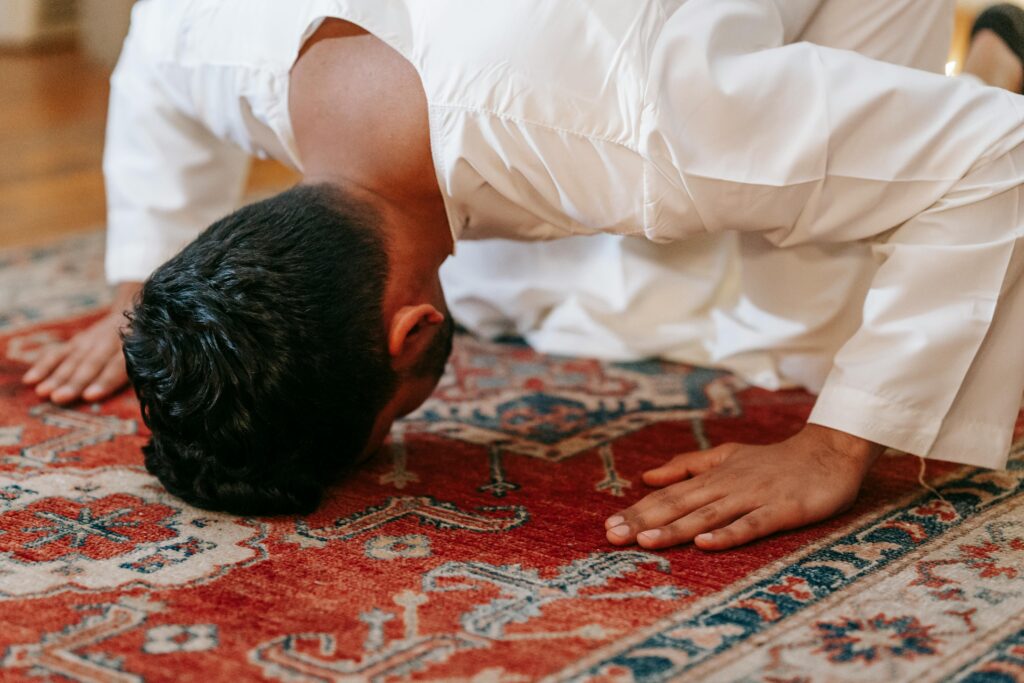
You feel this love. You feel it when you sit in sujood and you do not want to lift your head. You feel it when you remember your sins and, instead of despairing, you run back to Him because you cannot bear to be far from Him.
But sit with it for a moment.
Where did this love come from?
You did not manufacture it. You did not decide one morning: “Today I will love Allāh deeply.” You did not sit in a room and generate affection in your heart. He put it there. He is Al-Wadūd, and He loved you first.
Lā ḥawla wa lā quwwata illā billāh. Even your love for Him was His gift to you.
The Fear That Love Gives Birth To
And then, when love reaches its peak, a deeper layer of fear emerges. Not the fear of a slave for a master. The fear of a lover for his Beloved.
Rasūlullāh ﷺ said:
«مَنْ خَافَ أَدْلَجَ، وَمَنْ أَدْلَجَ بَلَغَ الْمَنْزِلَ، أَلَا إِنَّ سِلْعَةَ اللَّهِ غَالِيَةٌ، أَلَا إِنَّ سِلْعَةَ اللَّهِ الْجَنَّةُ»
“Whoever fears [Allāh] travels at night, and whoever travels at night reaches the destination. Indeed, the commodity of Allāh is precious. Indeed, the commodity of Allāh is Paradise.”
— Sunan al-Tirmidhī (2450), graded Ṣaḥīḥ by Shaykh al-Albānī
Fear is not one thing. It has layers. The first layer is the fear of His punishment. He is severe in punishment. The Fire is real. The Day of Judgment is real. The reckoning is real. And the believer who knows this does not play with his dīn.
But when love reaches its peak, a deeper layer of fear emerges. You begin to fear disappointing Him. You fear the look of the One you love when you return to Him with the very sin He warned you against. You fear the moment when the One who guided you, who turned to you, who loved you first, sees that you chose your nafs over Him. That fear is not the fear of a slave for a master. It is the fear of a lover for his Beloved. It is the fear of ḥayāʾ, shyness before the One who has given you everything.
And there is a third layer: the fear of being disgraced on the Day of Judgment. The fear of standing before all of creation with your book open. The fear of the khizy, the exposure that the people of understanding asked Allāh to spare them from:
﴿رَبَّنَا إِنَّكَ مَن تُدْخِلِ النَّارَ فَقَدْ أَخْزَيْتَهُ﴾
“Our Lord, indeed whoever You admit to the Fire, You have disgraced him.”
— Sūrah Āl-ʿImrān (3:192)
So you distance yourself from disobedience for all of these reasons together. Out of love for Him. Out of fear of disappointing Him. Out of fear of His severe punishment. Out of fear of being disgraced on the Day of Judgment. Every layer of fear is connected to love. And every layer of fear drives you back to Him.
But again, sit with it.
Where did this fear come from?
You did not go out one day and buy fear from the market. You did not manufacture it in your chest. He placed it there. He planted it. He made your heart soft enough to fear Him while hearts around you remained hard as stone. He gave you the love that produces the fear of disappointing Him. He gave you the awareness of the Day of Judgment that produces the fear of disgrace.
Lā ḥawla wa lā quwwata illā billāh. Even your fear was a gift.
The Circle Closes
So we go through hope, love, and fear, and each time we arrive at the same realization: none of it was ours. None of it came from us. Every single thing we thought we brought to the table was itself His gift.
You cannot hope in Him without admitting that He gave you the hope.
You cannot love Him without admitting that He loved you first.
You cannot fear Him without admitting that He gave you the fear.
And every time you say lā ḥawla wa lā quwwata illā billāh, you are not just acknowledging a truth. You are drowning in it. You are sinking deeper and deeper into the realization that your entire existence, from the first breath to the last tear, is held in His hands.
So what happens when you stand there? When you look back at the bird and see His fingerprints on every feather? When you realize that the hope, the love, the fear, every movement of your heart, was all from Him?
You become broken.
Not the brokenness of despair. But the brokenness of a soul that knows it owns nothing. A soul that realizes it needs Him for every breath, every heartbeat, every moment of guidance. A soul that sees itself as a beggar at the door of the King, who has been given everything not because it asked, but because He gave.
And then something rises.
The Crown of Gratitude
It comes quietly. It comes when you are not looking for it. It comes when you finally stop looking at yourself and start looking at Him.
It is not hope. It is not love. It is not fear. It is all three, matured and pressed together until they produce something that no human can manufacture. It is the crown that sits upon the head of love. It is shukr. Gratitude.
And you do not have to chase it. You do not have to force it. You do not have to sit down and decide: “Now I will be grateful.” It grows on its own, from the soil of your brokenness.
Gratitude for the hope He planted in you.
Gratitude for the love He placed in you.
Gratitude for the fear He gave you.
Gratitude for the guidance you did not deserve.
Gratitude for the forgiveness you received before you even asked for it.
Gratitude for the tawbah He enabled you to make, and then accepted when you did it.
Gratitude for the tears He gave you, and then used as a testimony on your behalf.
And when this gratitude comes, it becomes the engine of your worship. You do not pray because you are afraid. You do not fast because you want a reward. You do not read the Qur’ān because it is a duty. You do all of it because you are grateful. Because He was so good to you when you were so bad. Because He turned to you first. Because He loved you first.
Rasūlullāh ﷺ said:
أفلا أُحِبُّ أن أكونَ عَبدًا شَكورًا
“Should I not love to be a grateful servant?”
— Ṣaḥīḥ al-Bukhārī (4837)
He said this while standing in prayer until his feet swelled. Not to earn anything. Not to impress anyone. Because he was grateful. He understood lā ḥawla wa lā quwwata illā billāh better than any of us. He understood that the honor he has is from Allāh. And Allāh ʿazza wa jall says:
﴿وَمَا رَمَيْتَ إِذْ رَمَيْتَ وَلَٰكِنَّ اللَّهَ رَمَىٰ﴾
“And you threw not, [O Muḥammad], when you threw, but it was Allāh who threw.“
— Sūrah al-Anfāl (8:17)
The Promise That Makes It Grow
And Allāh ʿazza wa jall made you a promise:
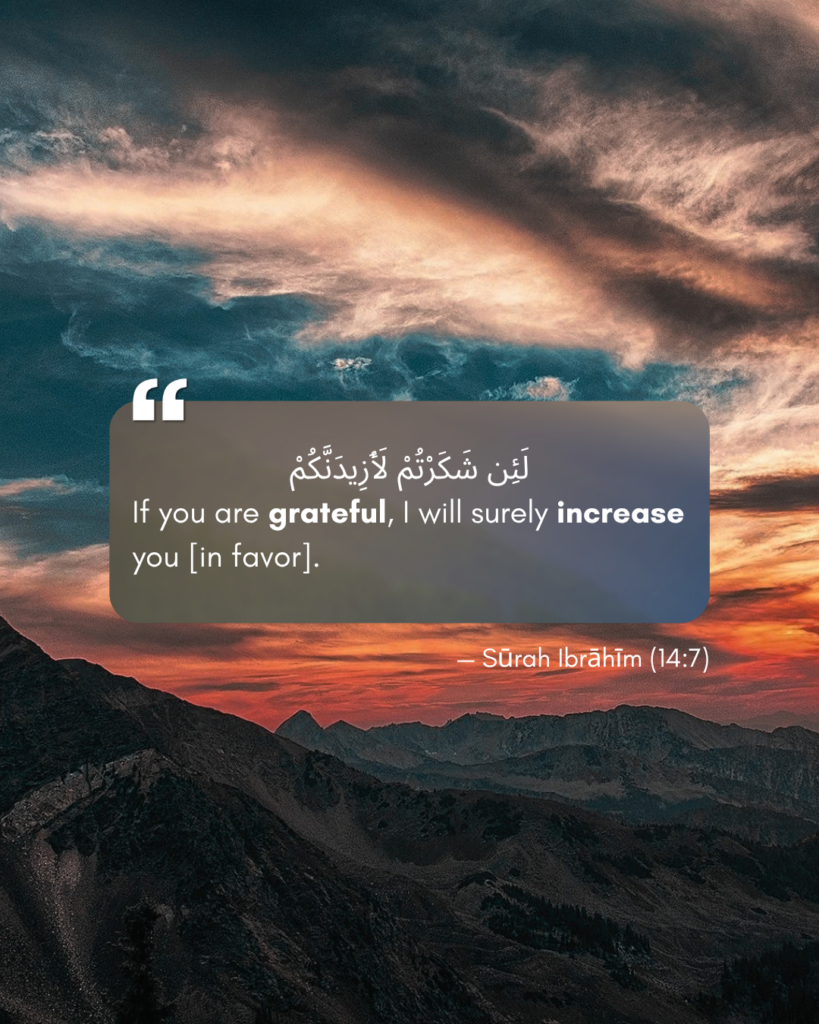
﴿وَإِذْ تَأَذَّنَ رَبُّكُمْ لَئِن شَكَرْتُمْ لَأَزِيدَنَّكُمْ﴾
“And [remember] when your Lord proclaimed, ‘If you are grateful, I will surely increase you [in favor]'”
— Sūrah Ibrāhīm (14:7)
Increase you in what? In favor. In īmān. So He increases the head, the love grows deeper. He increases the wings, the hope grows firmer, the fear grows purer. And when the bird grows, the crown grows with it. And when the crown grows, He promises to increase again.
Do you see the cycle? It is exponential. It is not a straight line. It is a spiral ascending. Every time you recognize that it was all from Him, gratitude rises. And every time gratitude rises, He increases the very foundations that produced it. The hope deepens. The love strengthens. The fear refines. And the crown adorns the head more beautifully than before. And the cycle begins anew.
This is how the awliyā’ of Allāh ascend. Not by adding new deeds on top of old ones. But by seeing the same deeds, again and again, as His gifts, and letting gratitude do its work.
And it all returns to the same phrase. The crown itself is from Him. The ability to be grateful is from Him. The hope, the love, the fear, the increase, all of it is from Him. Lā ḥawla wa lā quwwata illā billāh.
A Du’ā from the Grateful Heart
Yā Rabb, we come to You with nothing. Our deeds are dust. Our achievements are ash. Our strength is weakness. Our wisdom is ignorance. Everything good we ever did, You enabled it. Every step we ever took toward You, You guided it. Every tear we ever shed for You, You gave it. Every time we repented, You accepted it. Every time we called on You, You answered. Every time we knocked on a door, You opened it.
Yā Rabb, we do not have the strength to thank You properly. The gratitude itself is from You. Our tongues cannot do justice to what You have given. Our hearts cannot contain the weight of Your mercy.
But Yā Rabb, accept this little that we bring. Accept the trembling hands. Accept the broken words. Accept the tears that fall not from fear of Your punishment alone, but from the shame of how much You have given us and how little we have returned.
Yā Rabb, make us of the shākirīn. Make us of those who see Your hand in everything. Make us of those who never attribute any good to themselves. Make us of those who understand that even the gratitude we feel is Your gift, and who fall to their knees in awe of that.
Yā Rabb, increase us as You promised. Increase the hope. Increase the love. Increase the fear. And increase the crown of gratitude that adorns them all. Let the spiral ascend until we meet You with a heart that has forgotten how to claim anything as its own.
Yā Rabb, when we stand before You on the Day we meet You, do not look at our deeds. Look at the one who was saved by Your mercy, guided by Your grace, and brought back by Your love.
Āmīn yā Rabb al-ʿĀlamīn, bi-raḥmatika yā Arḥam ar-Rāḥimīn.
A Note on Sources and Verification
The analogy of the heart as a bird, with love as its head and fear and hope as its two wings, is the exact wording of Ibn al-Qayyim (raḥimahullāh) in Madārij al-Sālikīn, Vol. 2, p. 170 (PDF p. 181). The wording connecting lā ḥawla wa lā quwwata illā billāh to a treasure beneath al-ʿArsh al-ʿAẓīm is recorded in Musnad Aḥmad (21415), narrated by Abū Dharr raḍiyallāhu ʿanhu, graded Ṣaḥīḥ by Shaykh al-Albānī in Ṣaḥīḥ at-Targhīb (811), with corroborating narrations in Ṣaḥīḥ Ibn Ḥibbān (449) and al-Muʿjam al-Kabīr of al-Ṭabarānī (2/156, no. 1648). The hadith “Every son of Ādam is a sinner” is recorded in Sunan al-Tirmidhī (2499) and graded ḥasan by Shaykh al-Albānī. The hadith “The one who repents from sin is like one who never sinned” is in Sunan Ibn Mājah (4250), graded ḥasan by Shaykh al-Albānī. The hadith “Whoever fears…” is in Sunan al-Tirmidhī (2450), graded Ṣaḥīḥ by Shaykh al-Albānī. The hadith of Allāh’s joy at repentance is in Ṣaḥīḥ Muslim (2747). The hadith “Should I not love to be a grateful servant” is in Ṣaḥīḥ al-Bukhārī (4837). The verse of Sūrah Ibrāhīm (14:7) regarding gratitude and increase is cited directly, as is Sūrah al-Anfāl (8:17).
Any good in this work is from Allāh alone; any shortcoming is from me.